Biology News

Jul 22, 2026 by News Staff

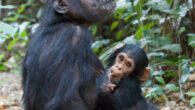
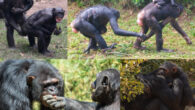
In a new study of chimpanzees (Pan troglodytes) and bonobos (Pan paniscus), scientists found that embraces, touches and other reassuring gestures before competition for food were linked to more peaceful sharing, suggesting the roots of human social touch stretch back at least six million years. Examples of bonobo and chimpanzee reassurance behaviors. Image credit: Z. Clay / J.S. Brooker. “Social tolerance, broadly defined as the tendency of conspecifics...

Jul 16, 2026 by Enrico de Lazaro

Researchers have identified and formally described a new species of the African monkey genus Colobus living in the remote interior of the Democratic Republic...

Jul 13, 2026 by Natali Anderson

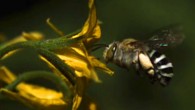
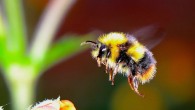
Slow-motion video reveals that buff-tailed bumblebees (Bombus terrestris) respond to sweet and bitter tastes with distinct, context-dependent behaviors...

Jul 7, 2026 by News Staff

In an analysis of 390 traditionally cultivated cacao trees representing traditional Amazonian varieties, researchers identified four previously unknown...

Jul 4, 2026 by Enrico de Lazaro

Biologists at the University of Minnesota say they have built a synthetic cell — made entirely from non-living chemical components — that can...

Jun 29, 2026 by Enrico de Lazaro

Scientists in Australia have revealed that what was long thought to be a single widespread planigale species is actually four distinct ones, including...

Jun 28, 2026 by Natali Anderson

The way humans laugh — in rapid, rhythmically timed bursts — is not uniquely ours. New research by the University of Warwick and the University...

Jun 23, 2026 by News Staff

New research spanning five continents and vastly different cultures — from the steppes of Mongolia to the rainforests of the Pacific — shows...

Jun 23, 2026 by News Staff

Domestic cats (Felis catus) develop the same patterns of brain shrinkage and neurological decline as aging humans, and scientists think that makes them...

Jun 22, 2026 by News Staff

A team of entomologists led by the University of Bristol and the Smithsonian Tropical Research Institute has compiled decades of data from butterfly houses,...

Jun 16, 2026 by Natali Anderson

Marine biologists have identified a new species of the shark genus Hemiscyllium in the waters of eastern Papua New Guinea, expanding a remarkable group...

Jun 14, 2026 by Natali Anderson

Two elusive groups of millipedes, Siphoniulida and Siphonocryptida, were the last missing pieces in the evolutionary history of Earth’s oldest land animals,...

Jun 11, 2026 by Natali Anderson

Hundreds of camera-trap records from Bolivia and Peru suggest the short-eared dog (Atelocynus microtis), one of the world’s least-known canids and one...

Jun 11, 2026 by Natali Anderson

Researchers have obtained the first-ever photographs of the Cozumel dwarf fox (Urocyon sp.), an elusive dwarf fox living on the Caribbean island of Cozumel,...

Jun 10, 2026 by Sergio Prostak

The extinct Eurasian cave lion (Panthera spelaea) and today’s African and Asian lions (Panthera leo) belong to separate evolutionary lineages that diverged...

Jun 10, 2026 by News Staff

Along with armadillos and anteaters, sloths are members of Xenarthra, the only clade of placental mammals to have originated in South America. In new research,...

Jun 8, 2026 by Natali Anderson

A small songbird inhabiting the Babar Islands, in the Banda Sea, Indonesia, has been identified as a new species after a duo of researchers discovered...

Jun 5, 2026 by Natali Anderson

Deep in the mountains of northern Taiwan, a towering Taiwania cryptomerioides — a large coniferous tree in the cypress family Cupressaceae whose...

Jun 3, 2026 by News Staff

Euplotes gigatrox, a new species of ciliate collected from a seawater filtration system on the Caribbean Island of Curaçao, can transform into a cannibalistic...

Jun 1, 2026 by Natali Anderson

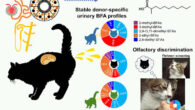
An international research team led by scientists from the University of Bonn, the University Hospital Bonn and the Max Planck Institute of Animal Behavior...